

Evidence-based care for all employees
Empower all employees to reach their full potential.
Description
RethinkCare provides skills‑based behavioral support for employees, managers, and parents of neurodivergent children (including autism, ADHD, learning differences, and related conditions) so they can function more effectively at work and at home. RethinkCare supports neurodiversity‑ and disability‑related challenges that are not typically addressed through traditional health plan or EAP pathways.
Behavioral Expertise Across Work and Home
Support is grounded in behavioral science and delivered by trained behavioral experts, including board‑certified behavior analysts (BCBAs). These specialists apply evidence‑informed strategies to adult functioning and child behavior, helping members build practical skills they can use immediately.
Support is grounded in behavioral science and delivered by trained behavioral experts, including board‑certified behavior analysts (BCBAs). These specialists apply evidence‑informed strategies to adult functioning and child behavior, helping members build practical skills they can use immediately.
Flexible Engagement: Self‑Directed Learning with Human Guidance
RethinkCare is intentionally designed with multiple engagement options—including self‑paced learning, expert coaching, and human‑guided navigation—to support a wide range of needs and preferences. This flexibility supports a wide range of needs and preferences—particularly for employees who are neurodivergent or navigating complex challenges that are not well served by self‑service tools alone.
RethinkCare is intentionally designed with multiple engagement options—including self‑paced learning, expert coaching, and human‑guided navigation—to support a wide range of needs and preferences. This flexibility supports a wide range of needs and preferences—particularly for employees who are neurodivergent or navigating complex challenges that are not well served by self‑service tools alone.
Everyday Behavioral Focus Outside Clinical Care
RethinkCare helps with practical, everyday behavioral challenges that fall outside traditional clinical pathways. Common needs include focus and executive functioning at work, communication differences, emotional regulation, and parenting routines for neurodivergent children. This gives employees and managers a clear place to turn when they need actionable, non‑clinical support.
RethinkCare tracks improvements across everyday behavioral and functional outcomes that directly affect performance, engagement, and caregiver strain. Based on outcomes data, members report measurable improvements across both parenting and workplace needs. See By The Numbers below. These outcomes demonstrate RethinkCare’s ability to improve everyday functioning at scale, helping organizations support employees and caregivers earlier and more effectively without requiring diagnosis or entry into traditional clinical pathways.
RethinkCare helps with practical, everyday behavioral challenges that fall outside traditional clinical pathways. Common needs include focus and executive functioning at work, communication differences, emotional regulation, and parenting routines for neurodivergent children. This gives employees and managers a clear place to turn when they need actionable, non‑clinical support.
RethinkCare tracks improvements across everyday behavioral and functional outcomes that directly affect performance, engagement, and caregiver strain. Based on outcomes data, members report measurable improvements across both parenting and workplace needs. See By The Numbers below. These outcomes demonstrate RethinkCare’s ability to improve everyday functioning at scale, helping organizations support employees and caregivers earlier and more effectively without requiring diagnosis or entry into traditional clinical pathways.
By The Numbers
Parenting and Caregiver Outcomes
- 48% improvement in parenting confidence, helping caregivers feel more capable managing daily challenges—leading to healthier family dynamics and more positive parent–child interactions
- 61% reduction in parenting-related stress, reducing sustained strain that often affects focus, attendance, and productivity at work
Workplace and Employee Outcomes
- 48% improvement in emotional and behavioral regulation, supporting steadier day-to-day performance and stress management
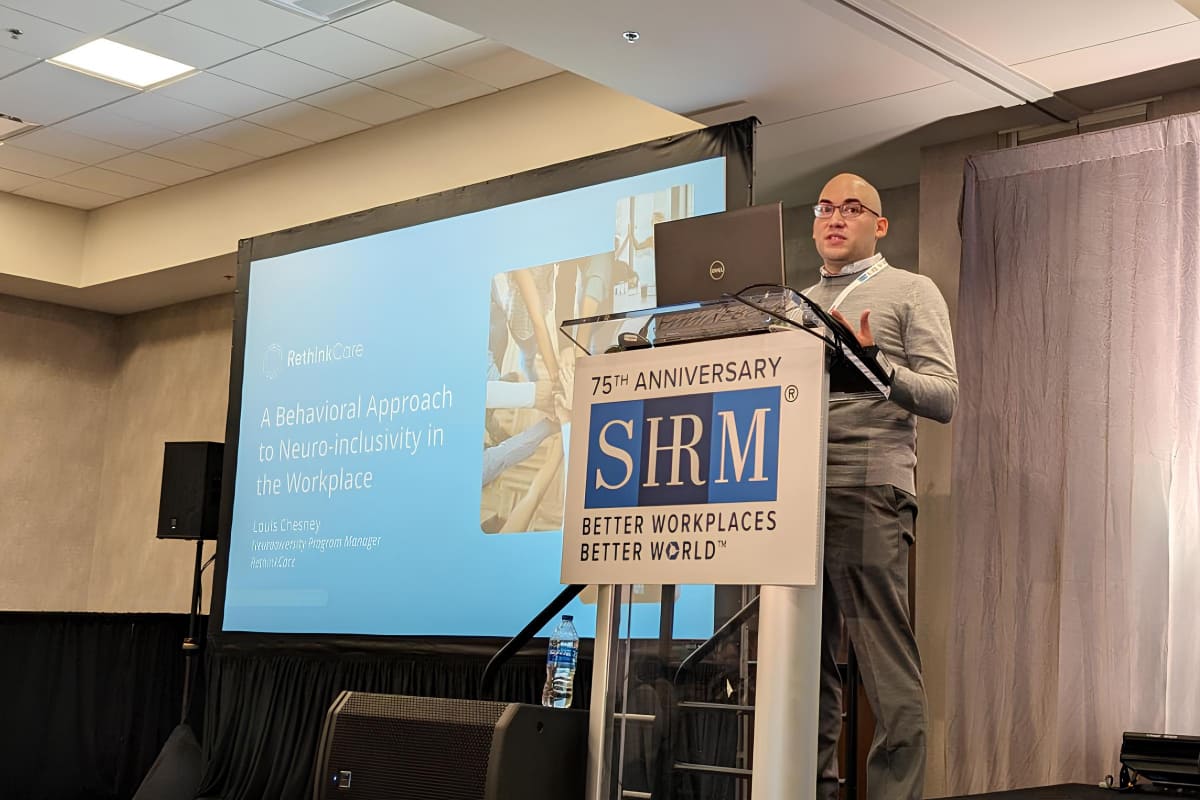
- 58% increase in neurodiversity knowledge, improving self-awareness and practical application in workplace settings
- 43% improvement in organizational skills, helping employees manage tasks, information, and competing priorities more effectively
- 55% improvement in planning and task management, supporting follow-through and day-to-day execution
- 42% improvement in time management, reducing overwhelm and missed deadlines
- 49% improvement in executive functioning (organization and planning combined), strengthening overall work effectiveness
Services
Personal Wellbeing
Helps employees learn and apply integral skills to manage stress, anxiety, and sleep issues through hundreds of expert-led mindfulness and resilience trainings.

Professional Resilience
Helps teams foster an inclusive, high-performing workplace through industry-leading career development trainings and workplace neurodiversity consultations available to employees at all levels.

Parental Success
Empowers working parents and caregivers with expert trainings and consultations to raise more confident and resilient children, including those who are neurodiverse (diagnosed with autism, ADHD, or other learning and developmental disabilities).
Media
Benefits

Parental Success
79% of RethinkCare participants state that their child’s behavior and/or skills have improved due to resources offered by RethinkCare; 67% of low-confidence users increased parental confidence within 9 months.

Personal Wellbeing
83% state that resources accessed through RethinkCare helped reduce their stress or anxiety.; 92% of participants say they feel better about their company for offering RethinkCare.
Professional Resilience
81% state that RethinkCare reduced the amount of time spent researching resources and ideas.
Testimonials
Resources


Integration Diagram
Data
Rewards
Rewards


Data
Rewardable activities
Rewardable activities